
About Nina Biddle
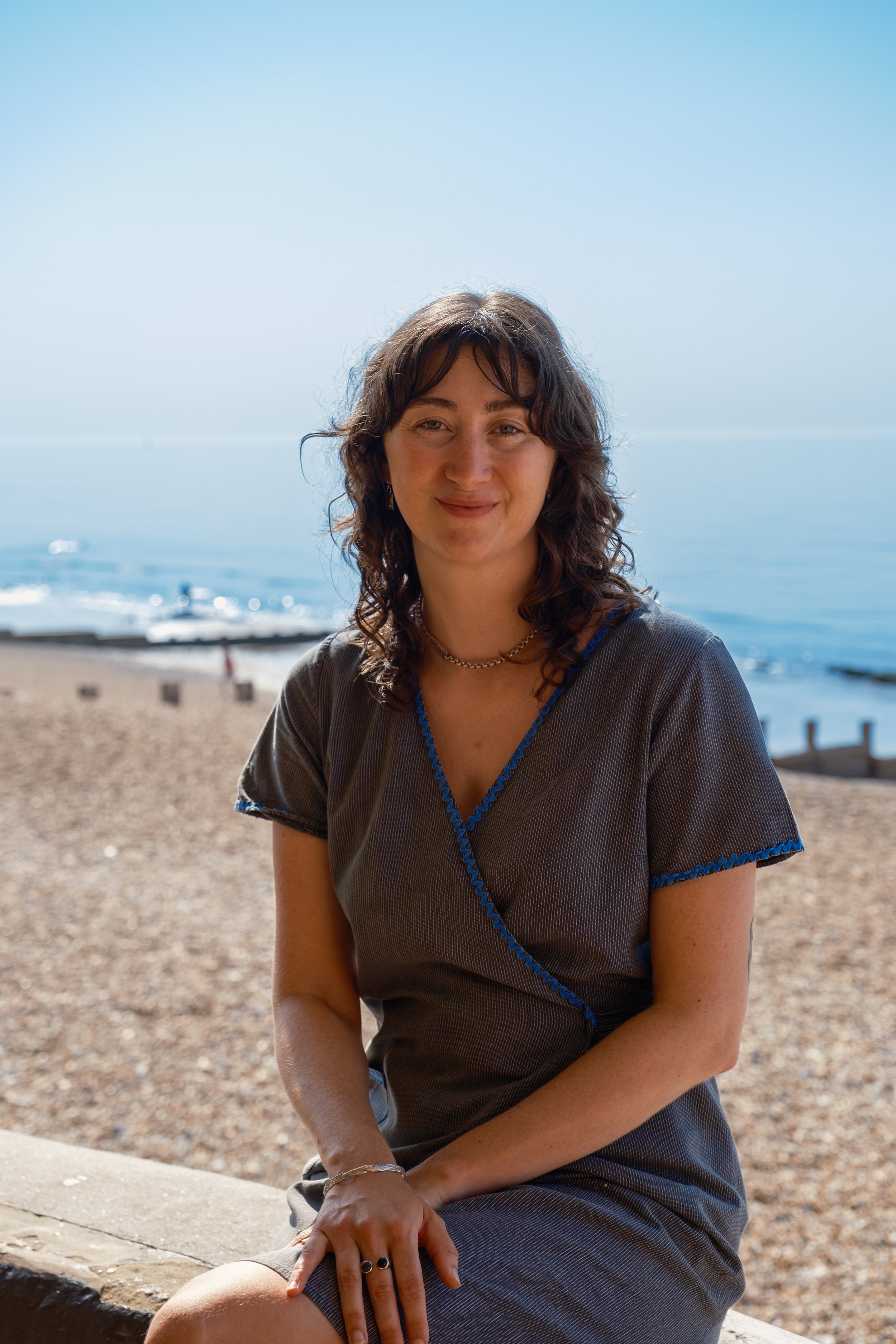
I'm Nina (she/her), a Trainee Integrative Arts Psychotherapist in the final year of a three-year MA based in Battle, East Sussex. I offer a warm, creative, and trauma-informed space for people seeking support with anxiety, trauma, identity, and life transitions.
◦ My approach & core values
How I work
Integratively
I don't follow one fixed model and instead adapt the work according to what you bring and the goals for therapy. My practice is non-pathologising. I am interested in understanding the experiences and patterns behind distress, while recognising that difficulties can be shaped by personal biology, relationships, environments and wider social systems.
Relationally
The therapeutic relationship is central to my work. I see you as the expert in your own life, and my role is to help you explore your experiences, grow awareness and create the conditions needed for healing and growth.
Intersectionally
I work from an intersectional perspective and am committed to creating an inclusive, anti-oppressive space where every client feels welcome, respected, and able to bring their whole self. My approach is entirely non-directive and affirmative.
I do not support, practice, or condone conversion therapy of any kind. I believe that sexual orientations and gender identities are not disorders to be cured, fixed, or suppressed. My therapeutic approach is entirely non-directive; I work collaboratively with clients to support their self-determination and emotional well-being without imposing any pre-determined agenda or goal to change who they are.
◦ Working creatively
Art & the body
Talking is an important part of therapy, but it isn't the only way of working. I may introduce drawing, painting, clay, movement, storytelling, music, sand tray or metaphor. I may also draw on mindfulness, breath and body awareness, particularly when it is useful to notice how experiences are held physically as well as emotionally. There is no expectation to be artistic, and creative work is always optional.
Art psychotherapy is an evidence-based, HCPC-regulated profession recommended by NICE guidelines and widely used throughout the NHS for complex trauma, psychosis, and severe emotional distress. It offers a structured yet flexible way to explore memories and emotions that feel difficult to express in words alone.

◦ Modalities
Theoretical influences
My work is informed by a range of therapeutic approaches, allowing therapy to be flexible and responsive to your individual needs and goals for therapy.
-
Exploring how early life experiences, unconscious patterns, and past relationships continue to shape our present lives and choices.
-
Understanding how our earliest bonds influence how we relate to ourselves, manage intimacy, and connect with others.
-
Developing here-and-now awareness of thoughts, feelings, and bodily sensations in the present moment.
-
Unpacking internal dialogues, ego states, and ingrained communication patterns within relationships.
-
Recognising the impact of trauma on the nervous system, focusing on pacing, safety, and emotion regulation.
-
Questioning rigid, 'one-size-fits-all' diagnostic norms that historically marginalise non-normative identities and lived experiences.

Experience, Training & Professional Memberships
◦ my background
I am currently completing a three-year MA in Integrative Arts Psychotherapy, following a Diploma in the Therapeutic and Educational Application of the Arts.
My professional background spans 6 years across private care work, specialist NHS digital projects (including eating disorder services), and clinical placements within NHS secondary care, and a domestic abuse charity. Within these settings, I have gained extensive experience in complex trauma, neurodivergence, disability, hormone sensitivity, psychosis, domestic abuse, eating disorders, refugee experiences, and LGBTQIA+ identities.
In my current clinical work, I am completing an NHS placement specialising in long-term therapeutic support for survivors of childhood sexual abuse.
I have been approved by my training institute to undertake private practice alongside regular clinical supervision.
I am working towards UKCP and HCPC registration and am a trainee member of BAAT and UKCP. I am committed to ongoing CPD and reflective practice.
My practice is informed by the UKCP Code of Ethics and relevant professional and legal frameworks.
Ready to Talk?
1. Reach out
Get in touch via the form on the contact page or email me: hello@ninabiddle.co.uk.
2. Initial consultation
A zero-pressure and free 15-minute phone call to see if we’re a good fit for one another.
3. Our first session
You’ll meet me in person in Battle to explore what our ongoing work would be like.